Table of Contents
Buying a home is one of the biggest financial decisions most people will ever make. Yet for many borrowers, the mortgage process feels confusing, overwhelming, and full of unfamiliar terminology.
It doesn’t have to.
Whether you’re buying your first home, refinancing an existing mortgage, or exploring ways to use your home equity, every mortgage follows the same underlying journey. Once you understand that journey, the entire process becomes much easier to navigate.
This guide is designed to give you the big picture before diving into the details.
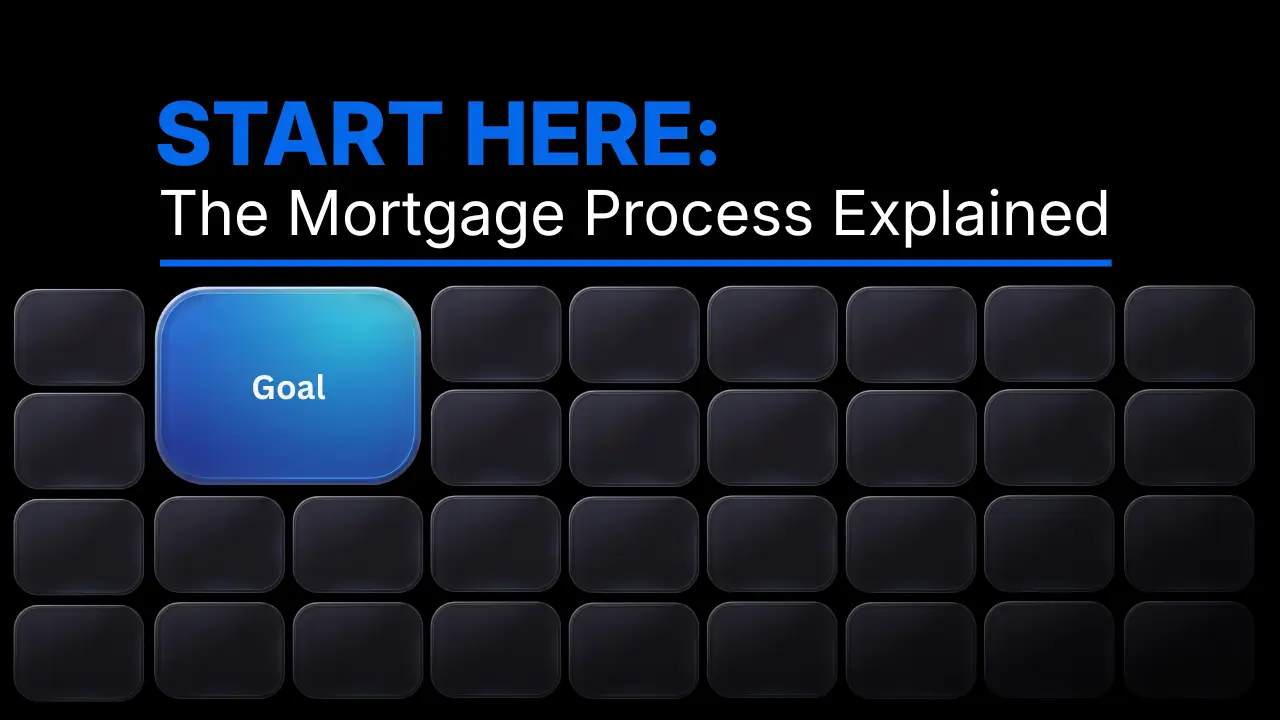
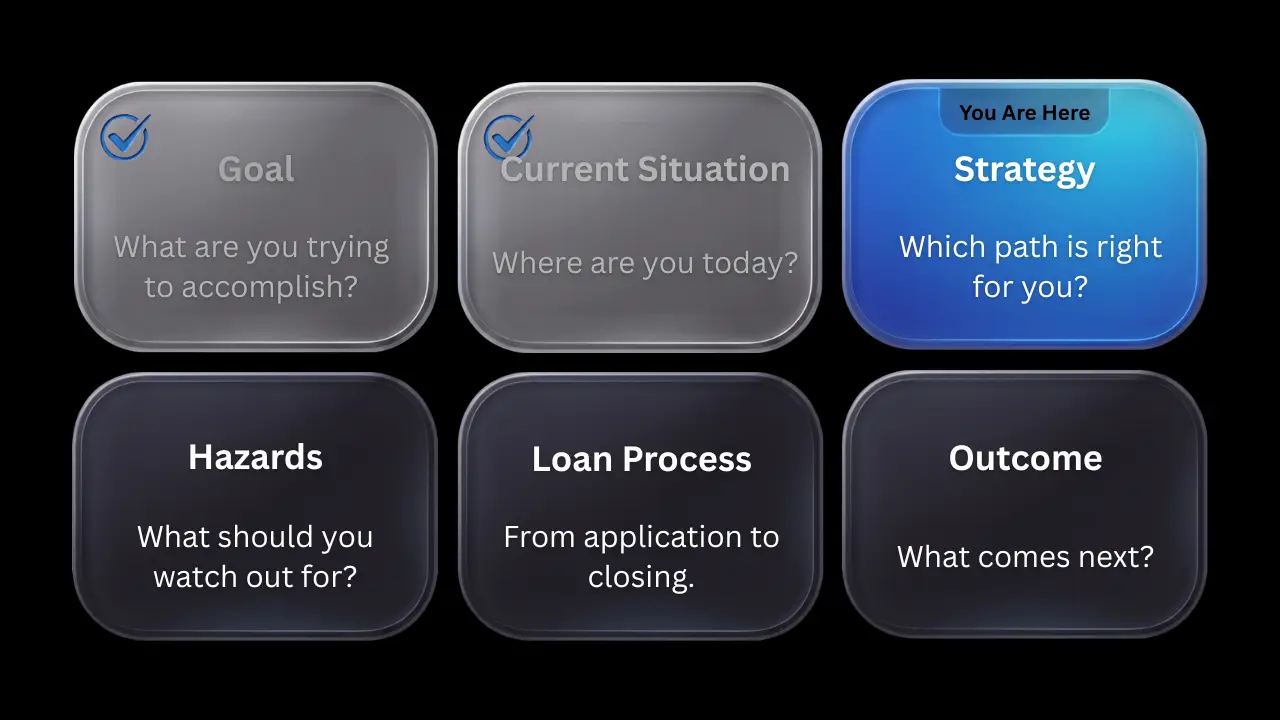
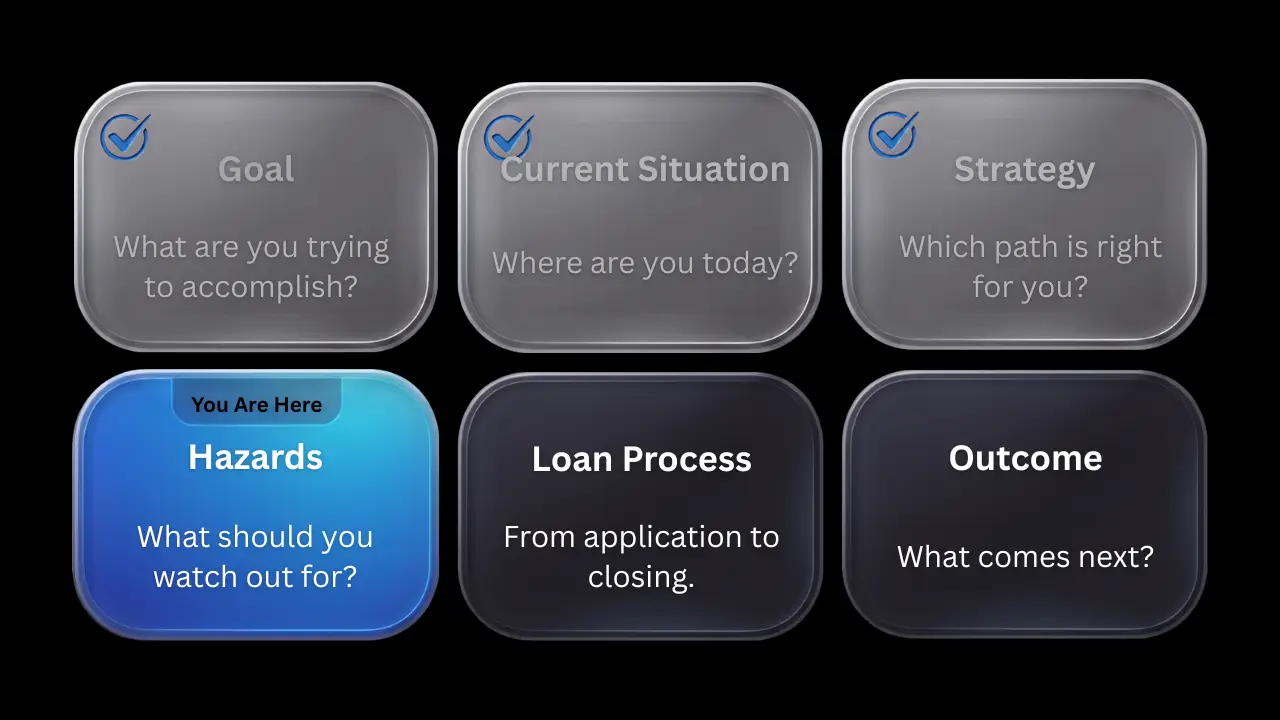
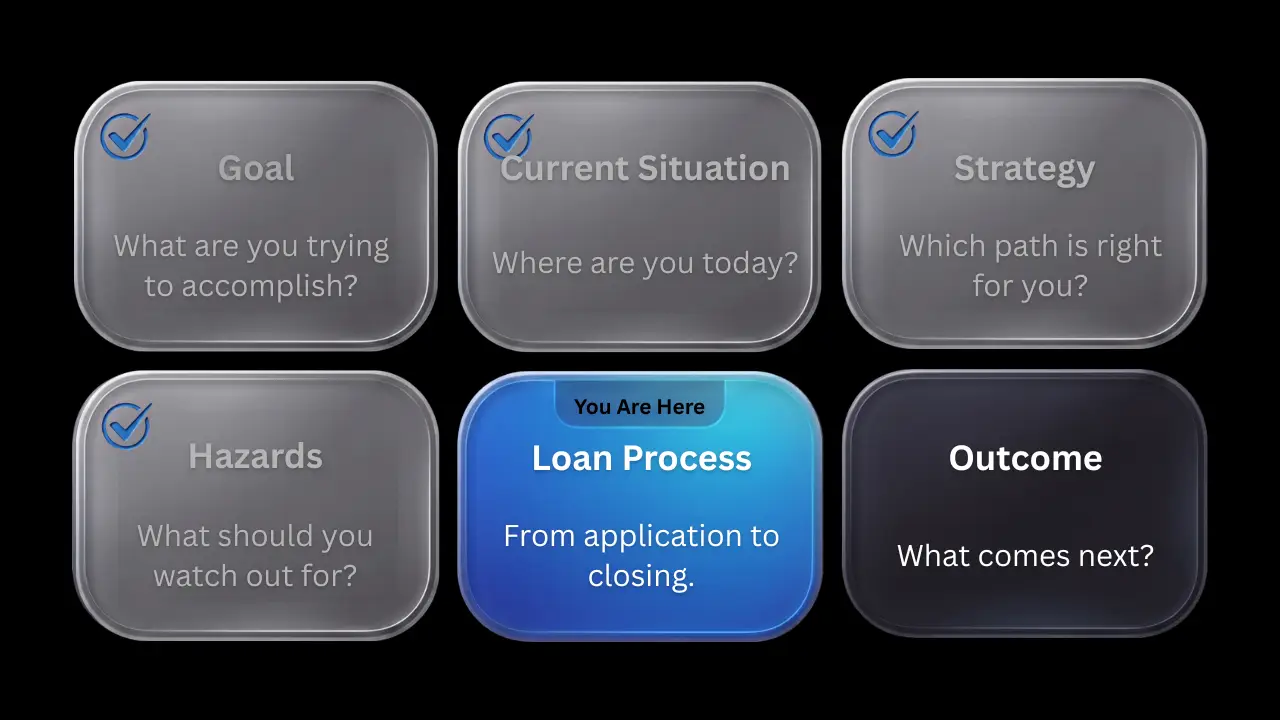
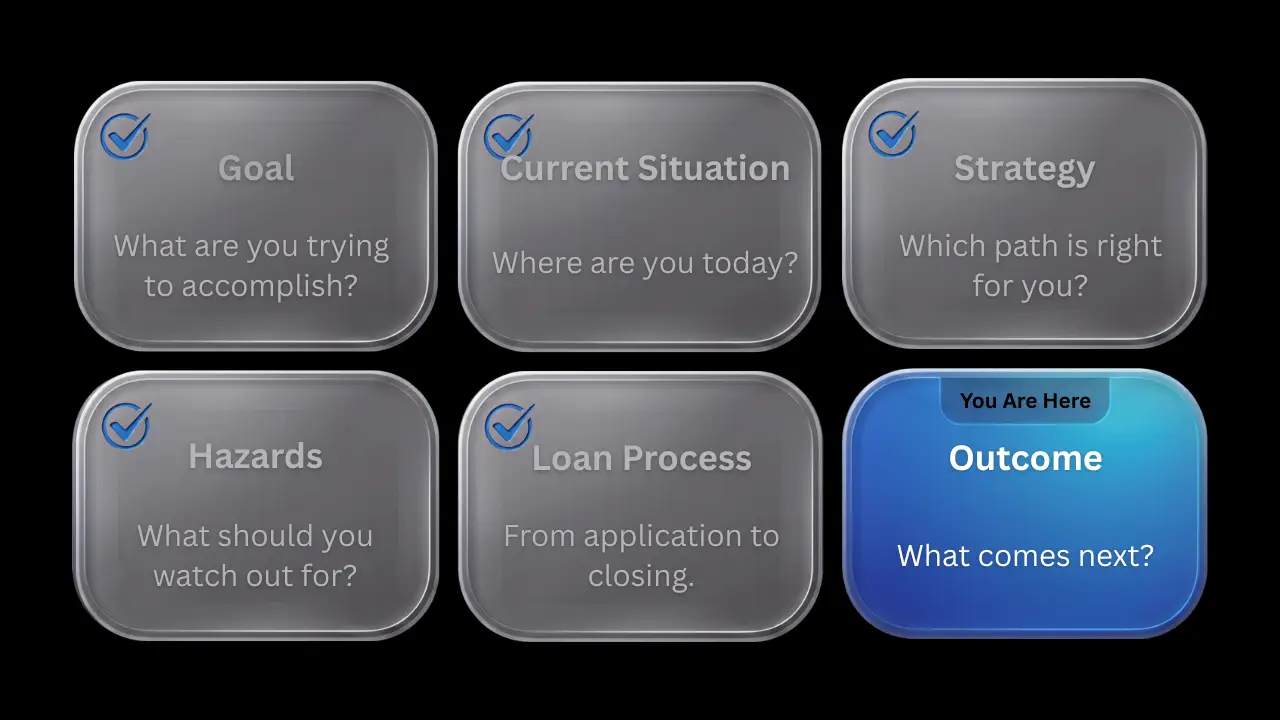
Instead of throwing dozens of disconnected mortgage terms at you, we’ll walk through the six major stages that every borrower encounters:
- Your Goal
- Your Current Situation
- Your Strategy
- Mortgage Hazards
- The Loan Process
- Your Outcome
Think of this page as your map. As you continue exploring Corbett Uzel + UMortgage, each section links to more detailed guides that explain every topic in depth.
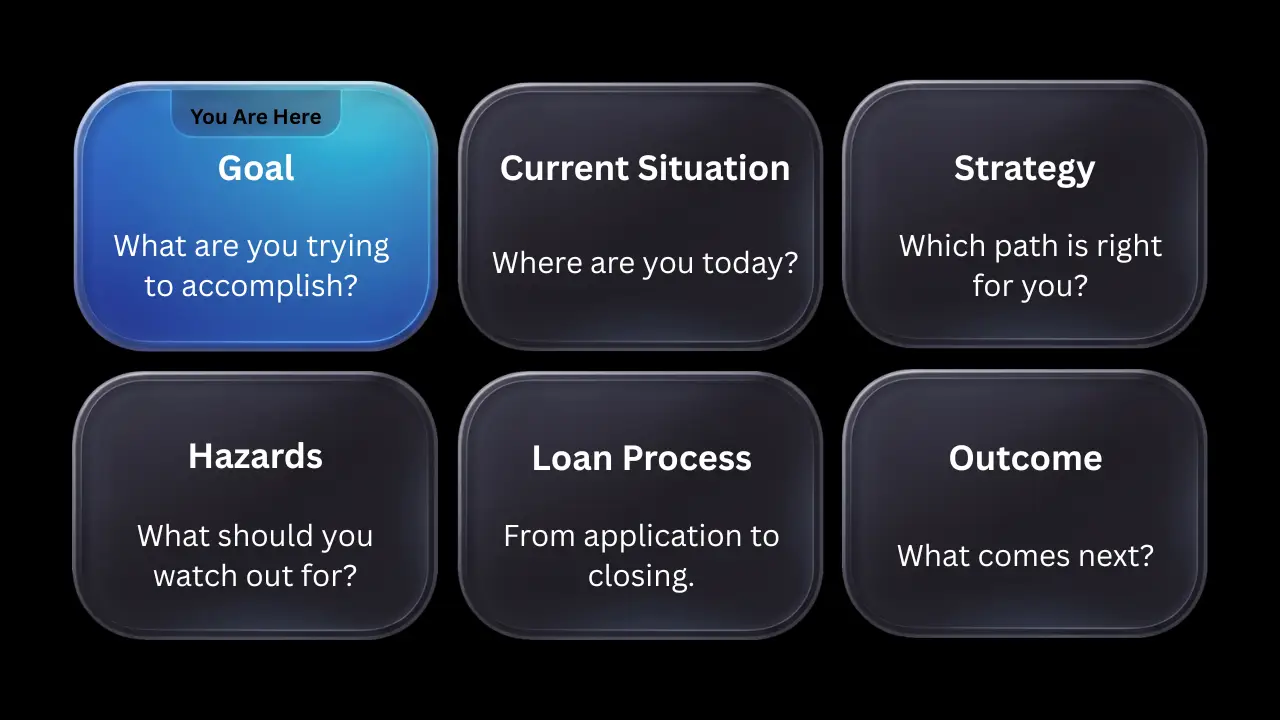
Your Goal
What are you trying to accomplish?
Every successful mortgage begins with a clear destination.
Different mortgage goals often require different financing strategies. Someone buying their first home may prioritize a low down payment, while a homeowner refinancing may focus on reducing monthly payments or accessing home equity. By identifying your goal first, every recommendation that follows becomes more purposeful.
The mortgage itself isn’t the goal. It’s simply a financial tool that helps you achieve something larger.
For example, you may be trying to:
- 🏡 Buy a Home
- First-time buyers
- Move-up buyers
- Downsizing
- Vacation homes
- 💰 Save Money
- Lower your payment
- Lower your interest rate
- Consolidate debt
- Remove mortgage insurance
- Improve monthly cash flow
- 💳 Access Equity
- Cash-out refinance
- HELOC
- Home Equity Loan
- Emergency funds
- Major expenses
- 🔨 Improve Your Home
- Remodel
- ADU
- Renovation financing
- Energy improvements
- HomeStyle Renovation
- 📈 Build Wealth
- Investment properties
- BRRRR strategy
- Rental property financing
- Long-term equity growth
- Real estate investing
Although these situations are very different, they all begin with the same question:
What are you trying to accomplish?
Clarifying your objective influences every recommendation that follows in the mortgage process, from loan selection to down payment strategy and closing timeline.
Whether your goal is to buy a home, save money, access equity, improve your home, or build long-term wealth, every mortgage follows the same underlying journey.
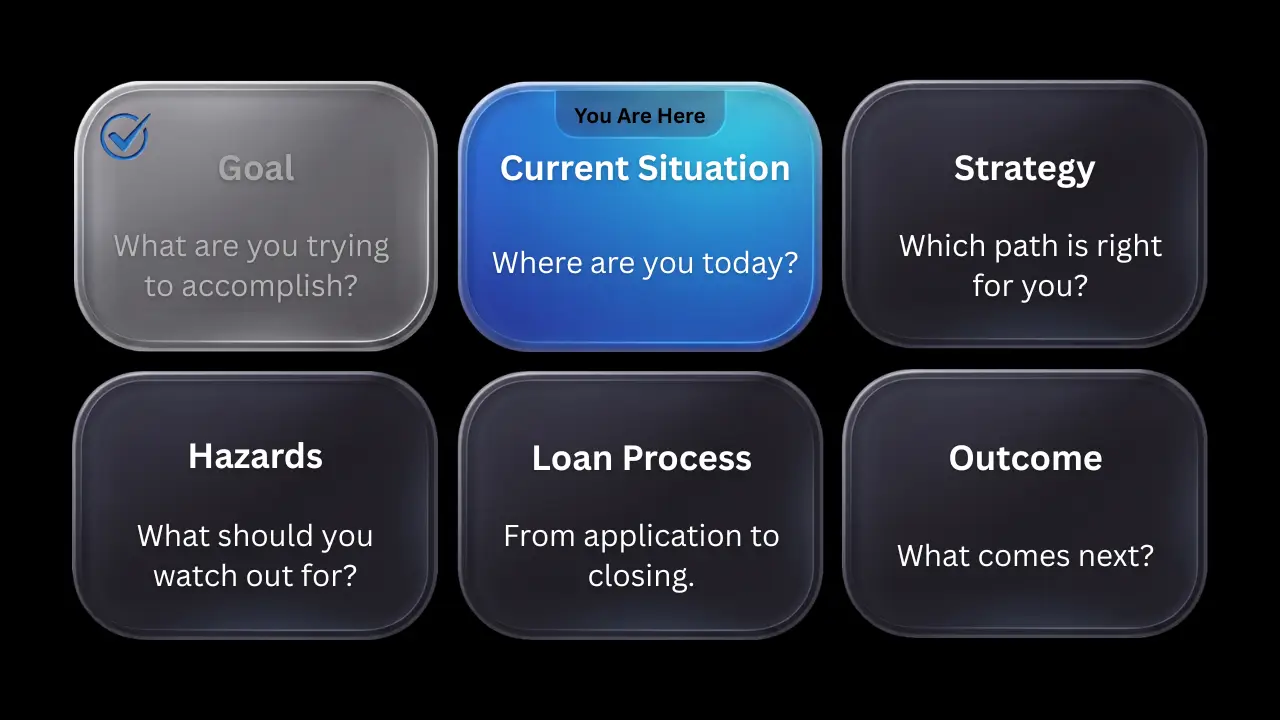
Your Current Situation
Where are you today?
Once your destination is clear, the next step is understanding your starting point.
Every borrower has a unique financial profile, and every property has its own characteristics. Together, they determine which financing options may be available.
Your current situation includes factors such as:
- Income
- Employment
- Credit history
- Savings and assets
- Existing debt
- Down payment
- Property type
- Home equity
- Local market conditions
Many people worry that one weakness—such as being self-employed or having less-than-perfect credit—means they won’t qualify. In reality, lenders evaluate your overall financial picture, and there are often multiple paths forward.
The goal isn’t to fit into a single mold. It’s to identify the financing strategy that fits your circumstances.
Your Strategy
Which path is right for you?
Now that you know where you’re going and where you’re starting, it’s time to choose the best route.
Mortgage strategy is about matching the right loan solution to your goals.
There isn’t one “best” mortgage. There is only the mortgage that best aligns with your financial situation, timeline, risk tolerance, and long-term plans.
This is where decisions are made about:
- Loan programs
- Down payment options
- Fixed versus adjustable rates
- Loan terms
- Rate locks
- Mortgage insurance
- Seller credits
- Closing cost strategies
A thoughtful strategy can save thousands of dollars over the life of a loan while reducing stress during the transaction.
Mortgage Hazards
What should you watch out for?
Even well-qualified borrowers can run into unexpected problems.
Fortunately, most mortgage issues are preventable when you know what to expect.
Some common hazards include:
- Changing jobs during escrow
- Opening new credit accounts
- Making large unexplained deposits
- Buying furniture before closing
- Wire fraud
- Appraisal issues
- Homeowners insurance delays
- Title problems
One of the most valuable parts of working with an experienced mortgage advisor is anticipating potential issues before they become expensive surprises.
Good planning doesn’t eliminate every obstacle—but it greatly reduces unnecessary delays and stress.
The Loan Process
From Application to Closing
With your strategy in place, it’s time to move through the loan process itself.
Although every transaction is unique, most mortgages follow the same general sequence:
- Initial consultation
- Mortgage application
- Document collection
- Pre-approval
- Property search (purchase loans)
- Offer accepted
- Loan processing
- Appraisal
- Underwriting
- Conditional approval
- Final approval
- Closing Disclosure
- Signing loan documents
- Funding
- Recording
- Closing
Throughout this process, multiple professionals work together, including your loan advisor, processor, underwriter, escrow officer, real estate agent, title company, and appraiser.
Knowing what happens at each stage helps reduce anxiety and allows you to prepare for what’s coming next.
Your Outcome
What comes next?
Receiving the keys isn’t the end of your financial journey.
For most homeowners, it’s only the beginning.
After closing, your mortgage becomes one part of a broader financial strategy that may include:
- Building equity
- Removing mortgage insurance
- Making extra principal payments
- Refinancing when appropriate
- Financing future renovations
- Purchasing additional properties
- Creating long-term wealth
Understanding these opportunities helps you continue making informed financial decisions long after your loan closes.
Mortgage process FAQs
Use these answers alongside the mortgage journey guide to prepare your documents, compare costs and understand what still needs to happen before closing.
When should I talk to Corbett about financing?
Before making an offer, especially if your income is variable, you have recently changed work or you need down payment assistance. An early discussion can help identify documentation gaps and a workable budget. You do not need to have selected a property to begin organizing your finances.
How long will my mortgage take to close?
There is no universal timetable. The loan program, appraisal, title review, property issues and completeness of the documents all affect timing. Ask the lender for a schedule tied to your transaction and the outstanding conditions, rather than treating an average closing time as a promise.
Does preapproval guarantee final approval?
No. It is based on the information reviewed and is usually conditional. The lender must still confirm the property and any remaining underwriting requirements. Ask what was verified, what could change the decision and how long the preapproval remains valid.
Do I need 20% down before I can apply?
Not always. Several programs allow eligible buyers to use smaller down payments, but the right amount depends on the loan and property. Budget for closing costs and other cash needs too. Corbett can compare options against the savings you want to retain after the purchase.
What should a self-employed applicant do first?
Organize your income history and the records that support it, including relevant tax returns and current business information. Ask for an income review before selecting a loan based on an assumed borrowing amount. A freelancer can qualify for standard financing when the requirements are met.
What does receiving a Loan Estimate tell me?
For most closed-end home mortgages, it gives you a standardized view of proposed costs and terms after application. It is not an approval. Use it to compare the payment, cash to close, loan costs and features, and ask about anything that differs from your earlier discussion.
Information checked September 7, 2026. Further reading: CFPB: preapproval · CFPB: Loan Estimates · CFPB: loan choices · Fannie Mae: self-employed income.
Why the Mortgage Process Feels So Confusing
Most people only go through the mortgage process a handful of times during their lives. At the same time, they’re asked to learn unfamiliar terminology, compare loan programs, understand underwriting requirements, gather financial documents, and make decisions involving hundreds of thousands of dollars. It’s no surprise that the mortgage process can feel overwhelming.
The good news is that while every borrower’s situation is different, the underlying process is remarkably consistent. Once you understand the framework, every decision becomes easier to place into context.
Final Thoughts
Understanding the mortgage process isn’t about memorizing every guideline or loan program. It’s about knowing where you are, where you’re trying to go, and what comes next.
That’s the purpose of Corbett Uzel + UMortgage.
As you explore this site, you’ll find detailed guides that expand on every stage of the journey—from choosing the right strategy to navigating underwriting and building long-term wealth through homeownership.
Wherever you are in your mortgage journey, understanding creates confidence.